
"Inclusion is the way I see
the world."
Danijela grew up in a family with deaf parents and a younger brother. She started her career as a cashier. Today she is a change implementation specialist, with a passion for banking and sign language.
What is inclusion for you?
I am a so-called CODA, a Child of Deaf Adults, which meant that I had to support my parents with calls and administrative tasks at a young age. That’s why, for me, inclusion is not a project, a campaign, or a corporate initiative. It is something I have experienced throughout my entire life. It has shaped the way I communicate, think, build relationships and see the world. Communication is not really about language. It's about understanding, connection, and making sure that everyone has a place at the table. No matter how small the community is, people deserve equal access to information.
What is something many people don’t know about sign language?
Many people are surprised that Serbian Sign Language is different from American, British, or Italian Sign Language. Every country has developed its own sign language, depending on the local culture and the way ideas are expressed.
Another thing is that sign language is also highly contextual because one sign may have several meanings depending on the context. What makes it even more fascinating is that different interpreters may translate the same speech in different ways while communicating exactly the same message. I often compare it to different accents or dialects in spoken language. People do not always express themselves in the same way, but they still understand each other.
How has sign language influenced who you are today?
After completing my studies and professional training in sign language, I started working as a Serbian sign language interpreter and educator. Two years ago, I had the opportunity to bring together my two passions, banking and sign language, through a financial education campaign. It reinforced my belief that diversity and inclusion are not only personal values but also values embraced by the organization I work for.
The ability to understand different perspectives and build bridges between people is valuable not only in everyday life but also in the business world, where bringing together different viewpoints, fostering understanding, and creating meaningful dialogue are often key to successful collaboration and decision-making. This is particularly important when it comes to implementing change – the more perspectives we take into account, the better we can meet people’s needs and shape solutions in a way that is both successful and inclusive.
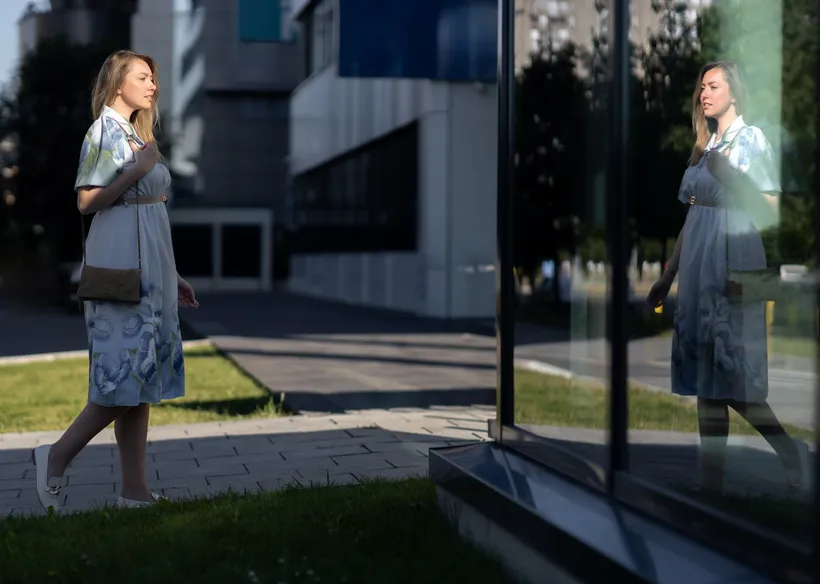
When you look into the mirror today, what do you appreciate about yourself?
As a child, I made a promise to myself that when I became an adult, I wouldn’t forget what was important to me as a child. I didn't want responsibilities or career ambitions to pull me in a direction where I cannot be myself completely. One thing I appreciate about myself today, is my ability to understand different perspectives and connect with people who don't always understand each other easily. I naturally look for the meaning behind people's actions and behaviors and try to understand why someone thinks differently, what motivates them, what challenges they might be facing, or what experiences have shaped their perspective. Over time, I realized that these experiences are actually my strength. Growing up in two different communication worlds gave me a perspective that not everyone has, and today I feel comfortable bringing that perspective into discussions, sharing my ideas openly, and contributing in my own way.