
At Special Olympics Austria, Dávid’s dream comes true:
being a superstar
The #believeinyourself story from Gabriella Baksa-Hasko and her son Dávid
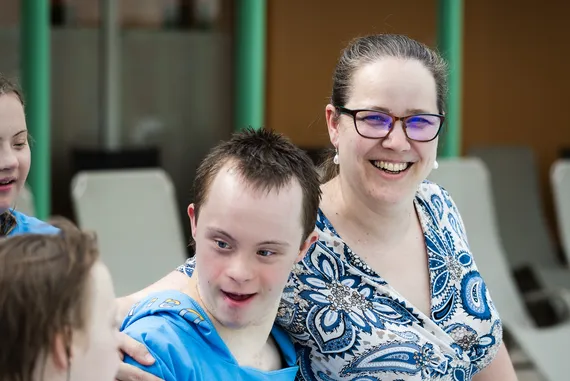
Gabriella Baksa‑Hasko has been working in Social Banking at Erste Holding for two years. Originally from Hungary, she is the mother of two children, Máté (15) and Dávid (17). Dávid has trisomy 21 and loves swimming. With strong #believeinyourself spirit, Dávid and his entire family are eagerly looking forward to the Special Olympics Austria Summer Games – a shared goal that brings them closer together, gives them strength, and fills them with joy.
© Marlena König
Dear Gabriella, what was your biggest #believeinyourself moment?
Two years ago, I moved from Hungary to Austria to give my children a better future. My son Dávid has trisomy 21 and needs special support. Since he loves swimming, I enrolled him in a course for children with disabilities. However, it turned out to be more of a water therapy session, which didn’t challenge him enough. In Budapest, he was used to competitions - that motivates him. When he is underchallenged, he doesn’t listen to the coach and just does whatever he wants - like any child would.
I realized I needed to change something, even though doing so in a new country was a big challenge.
So, what did you do?
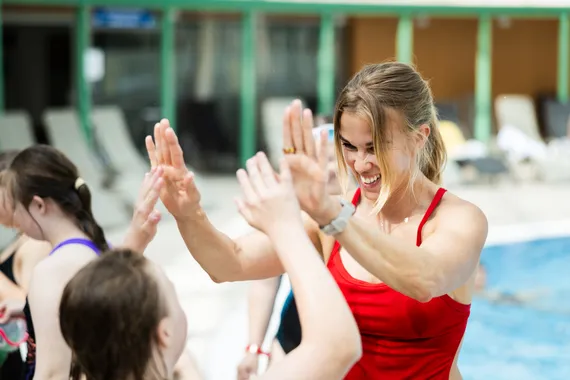
With a lot of #believeinyourself spirit, I asked the coach if she would train David for the Special Olympics Austria Summer Games - and she said yes. I also found five other children. Despite many hurdles such as registrations, medical check-ups, and administrative processes, I managed everything, often with the help of others.
In the end, we founded our team ADELLA – Heart Waves, named after the children’s initials, and received confirmation that our six children could participate. A dream came true! I was incredibly proud and happy.
What does participating in the Special Olympics Austria mean for Dávid?
David is so excited and talks about nothing else! He has a clear goal and trains diligently. The medal itself is not that important to him - he wants to be a superstar!
© Marlena König
Through training, we have also become part of a community created by parents of young people with trisomy 21, who organize many activities together. This social exchange is a wonderful enrichment for David and for us as parents.
What is daily life like with your son with trisomy 21?
Among people with trisomy 21, Dávid is considered “average” in his development. He has no physical health issues, which we are very grateful for.
In terms of his cognitive abilities, he is roughly equivalent to a 5- to 6-year-old child, so he requires care similar to that of a young child. He can do many things but still needs supervision - for example, to avoid putting his T-shirt on over his pajamas. He knows how to do things properly, but sometimes he just doesn’t. He loves teasing us, his parents - a real little rascal! It takes a lot of patience and creativity.
David can count and knows the alphabet, but he still reads very slowly. He loves board games, so we play a lot with him. We also read to him frequently, which is why he has a very rich vocabulary - in Hungarian. In German, he is still gradually building his basic vocabulary.
Where do you find the strength to balance family and work? Do you have time for yourself?
Having a son with trisomy 21 is part of my identity, but it’s not my entire identity. I also have a very good relationship with my younger son, Máté. He is 15 and attends a science-focused high school. He is very good at mathematics, he loves writing stories and painting minifigures. He learned German in a very short time.
I enjoy playing more complex board games with him and my husband or going to musicals, for example.
I love my job and feel very comfortable within my team. Fortunately, I can also continue my hobby from Hungary here in Vienna - dancing in the Hungarian folk dance group Napraforgók. That brings me joy and gives me strength.
What would you like to share with your colleagues?
I’ve had the positive experience that whenever Dávid comes up in conversation, people respond with genuine interest. Whenever I need help, I receive it - whether from my manager through flexible working hours or from German-speaking colleagues who support me with administrative matters when I get stuck.
I am so happy for David that Special Olympics also exist in Austria and that he can take part! It’s not only about having a goal and having fun. It’s also about people with intellectual disabilities meeting and connecting. A special aspect of the Special Olympics is that these individuals are visible in public. Because only when people interact, get to know each other, and learn to accept each other’s differences can they overcome hesitation and barriers.
Having a child with trisomy 21 is not a tragedy - just as being a person with this condition is not. I simply wish that people would approach them with more openness. And I am convinced that sports, in particular, can build bridges and connect people.
So: Come to the Special Olympics Austria Summer Games, taking place from June 25 to 30 in Vienna, and get to know the athletes—the real superstars! Cheer them on and celebrate them! Admission is free.
All dates at a glance: Schedule – Special Olympics Austria
Erste Bank is proud to be a partner of Special Olympics Austria for the first time this year.